Emotional Intelligence (EQ) has long been heralded as a cornerstone of effective leadership, interpersonal relationships, and personal growth. The model has become a cornerstone in psychological and organisational development since Daniel Goleman introduced the five domains of EQ—self-awareness, self-regulation, motivation, empathy, and social skills. However, as we approach 2025, the world is facing unprecedented disruptions. The rapid advancements in artificial intelligence and persistent global environmental, political, and industrial challenges demand a fresh perspective on EQ.
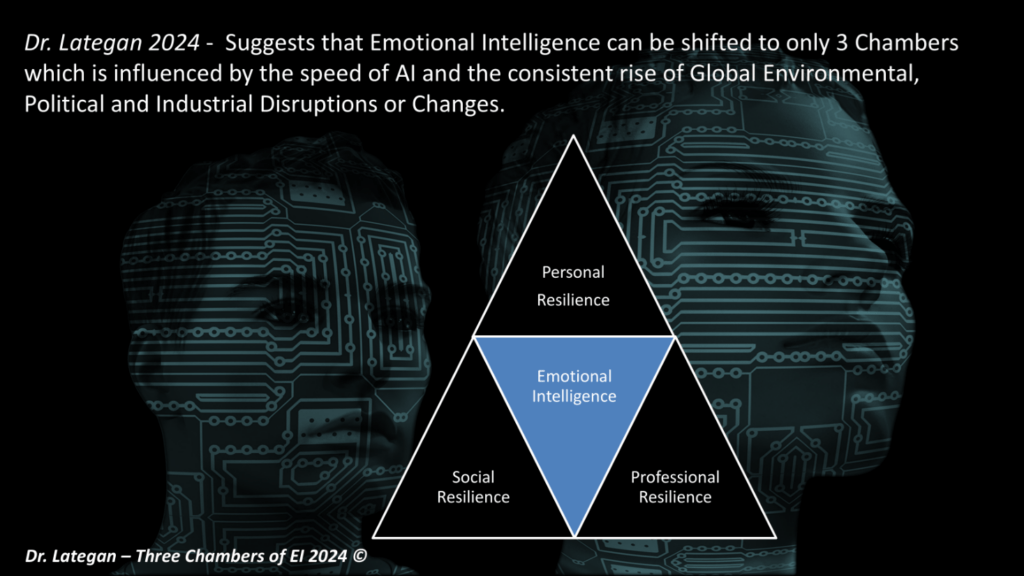
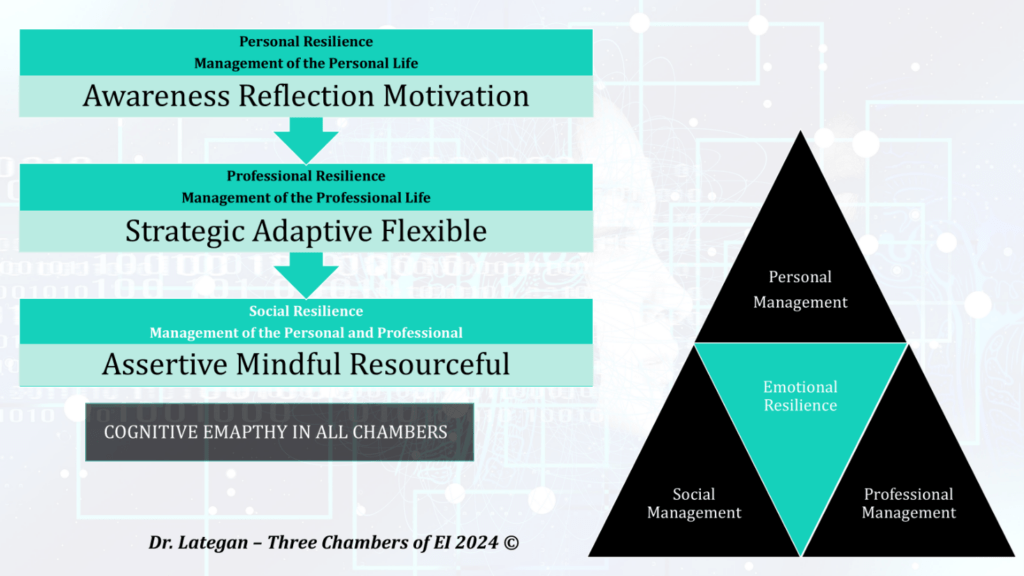
I propose an updated EQ framework, condensed into three interconnected chambers: Personal, Social, and Professional Management. Together, these chambers foster Emotional Resilience, an essential attribute for navigating the complexities of our modern world.
The Three Chambers of Emotional Intelligence
- Personal Management: Building Personal Resilience
The first chamber of this model focuses on the management of one’s personal life. Emotional resilience begins with mastering Personal Resilience, which encompasses:
o Awareness: The ability to recognize and understand your emotions as they arise.
o Reflection: A deliberate process of evaluating emotional responses to experiences and challenges.
o Motivation: Cultivating an intrinsic drive to grow, adapt, and persevere despite personal obstacles.
Personal Management is foundational; without it, individuals cannot effectively manage their interactions with others or their professional responsibilities. In a world increasingly influenced by AI, developing personal awareness and adaptability becomes crucial for maintaining a sense of identity and purpose. - Social Management: Building Social Resilience
The second chamber emphasizes the management of relationships, both personal and professional. Social Resilience emerges from mastering:
o Assertiveness: The ability to communicate needs, boundaries, and expectations effectively and respectfully.
o Mindfulness: Being fully present and empathetic in interactions with others.
o Resourcefulness: Leveraging social networks and support systems to navigate challenges and foster collaboration.
Social Management bridges the gap between the personal and the professional, emphasizing the importance of interpersonal skills in maintaining harmonious and productive relationships. In a volatile and interconnected world, social resilience is essential for building communities that thrive under pressure. - Professional Management: Building Professional Resilience
The third chamber focuses on the management of one’s professional life. Professional Resilience requires:
o Strategic Thinking: The capacity to plan and prioritize effectively in dynamic environments.
o Adaptability: The ability to pivot and innovate in response to change.
o Flexibility: A willingness to embrace new ideas, technologies, and approaches.
Professional Management ensures individuals can contribute meaningfully to their organizations and industries. In an era of rapid technological advancement and global uncertainty, professional resilience enables leaders and employees alike to remain competitive and impactful.
The Outcome: Cognitive Empathy and Emotional Resilience
Mastering these three chambers culminates in Cognitive Empathy, a heightened ability to understand and respond to others’ emotions with precision and insight. Unlike traditional models that emphasize emotional empathy, cognitive empathy is action-oriented, blending emotional awareness with practical problem-solving.
By achieving personal, social, and professional resilience, individuals become more equipped to navigate disruptions and complexities with confidence. This holistic approach transforms EQ from a static set of traits into a dynamic framework for thriving in an ever-changing world.
Implications for Future Research
This updated model of Emotional Intelligence challenges the status quo and offers a pathway for further exploration:
- Relevance of EQ in the Age of AI: Investigate how the integration of artificial intelligence into workplaces and daily life reshapes the application and development of EQ.
- Measuring Resilience: Develop metrics and tools to assess Personal, Social, and Professional Resilience within diverse contexts.
- Training and Development: Explore effective methods for teaching this updated EQ model in educational, organizational, and community settings.
- Impact on Organizational Performance: Examine the correlation between Emotional Resilience and key organizational outcomes such as employee engagement, innovation, and adaptability.
Conclusion
The traditional five-domain model of Emotional Intelligence has served as a valuable foundation for decades, but the challenges of 2025 demand a more agile and focused framework. By consolidating EQ into the three chambers of Personal Management, Social Management, and Professional Management, this model provides a roadmap for fostering Emotional Resilience in a world of rapid change. This approach not only aligns EQ with the demands of the modern era but also offers individuals and organizations a powerful tool for thriving in the face of uncertainty.
As we advance into 2025, let this new model inspire leaders, educators, and researchers to embrace change, challenge conventions, and build a more resilient future.